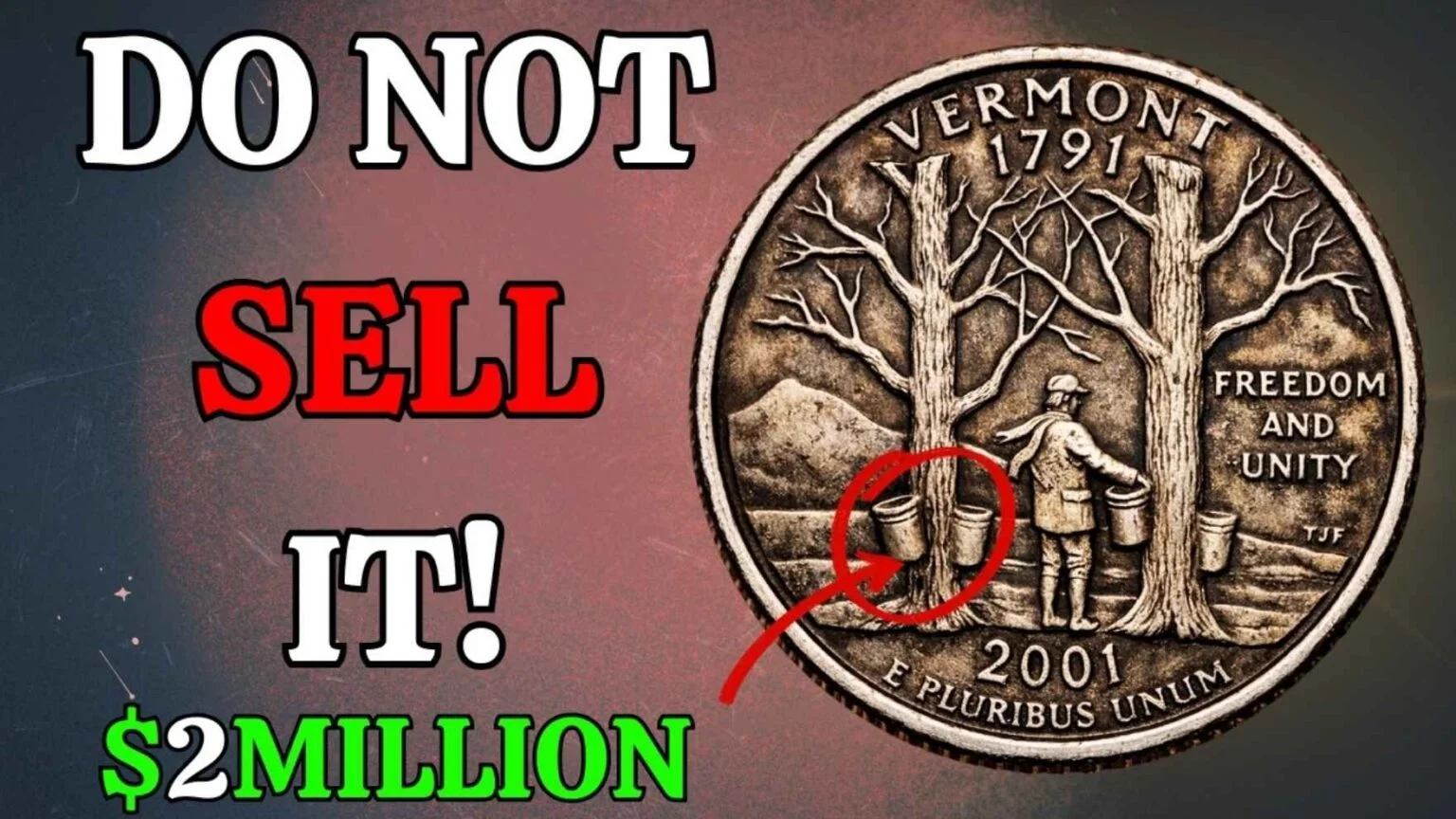
The State Quarter Program, launched in 1999, quickly became one of the most successful coin programs in United States history. Over ten years, the U.S. Mint released quarters representing all 50 states, each with its own unique design celebrating local history, culture, and landmarks. Millions of people began collecting these coins from everyday change, turning a simple currency program into a nationwide hobby. While most state quarters remain worth only their face value of 25 cents, certain rare varieties and minting errors have become highly valuable. In 2026, collectors continue searching for these special coins, and some examples are worth hundreds or even thousands of dollars. This guide explores the Top 5 Rare State Quarters Worth Big Money in 2026 and explains why collectors prize them so highly.
2004-D Wisconsin Extra Leaf Quarter
One of the most famous errors in the entire state quarter series is the 2004-D Wisconsin Extra Leaf Quarter. The coin’s design features a cow, a wheel of cheese, and a stalk of corn, representing the state’s strong agricultural heritage. However, some coins were struck with an unusual extra leaf on the corn stalk. Two different varieties exist, known as the High Leaf and Low Leaf errors. Experts believe this happened due to a die modification or accidental damage to the minting die during production. Because only a limited number of these coins entered circulation, they are highly collectible today. In 2026, high-grade examples of the Wisconsin Extra Leaf Quarter can sell for $200 to $1,000 or more, depending on condition.
Hidden Treasure: 2026 Lincoln Wheat Penny Worth $100K Found in Everyday Change
2005 Minnesota Double Die Quarter
The 2005 Minnesota State Quarter features a peaceful landscape with trees reflected in a lake. Some coins from this year were struck with a doubled die error on the reverse side. This error causes extra tree images to appear near the forest line, making it look as if the design includes additional trees. Several different doubled varieties exist, making the Minnesota quarter especially interesting to collectors. The clearer the doubling and the better the condition of the coin, the higher the value. In 2026, collectors may pay $100 to $500 for these coins, with some rare examples selling for even more.
1999 Delaware “Spitting Horse” Quarter
The 1999 Delaware State Quarter holds special importance because it was the first coin released in the state quarter series. The design shows Caesar Rodney riding on horseback during his historic ride for independence. On some coins, a die crack extends from the horse’s mouth toward the edge of the coin. This crack creates the illusion that the horse is spitting, which led collectors to nickname it the “Spitting Horse” Quarter. Although the error is subtle, it has become well known among coin collectors. In 2026, well-preserved examples can sell for $50 to $200, with higher-grade coins sometimes reaching greater values.
2001-P New York Double Die Quarter
The 2001 New York State Quarter features the Statue of Liberty along with the state outline and the phrase “Gateway to Freedom.” Some coins from the Philadelphia Mint were struck with a doubled die, creating visible doubling on letters and parts of the design. This error variety is relatively rare, especially in uncirculated condition. Collectors appreciate it because it combines a famous American symbol with a noticeable minting error. In today’s collector market, these coins can sell for $100 to $1,000, depending on the strength of the doubling and the coin’s overall condition.
2000-P South Carolina Off-Center Quarter
Another interesting collectible is the 2000-P South Carolina Off-Center Quarter. The normal design includes the state outline, a palmetto tree, and the Carolina wren. However, some coins were struck off-center during the minting process. When this happens, the coin’s design is not properly aligned, leaving a blank section of the metal visible. Off-center errors are visually dramatic and easy to identify, which makes them attractive to collectors. The value depends on how far the design is shifted from the center. In 2026, some off-center South Carolina quarters can sell for hundreds of dollars, especially when the date and design remain visible.
Why These Quarters Are Valuable
Rare state quarters gain their value from a combination of rarity, condition, and collector demand. Minting errors such as doubled dies, die cracks, and off-center strikes occur accidentally, which means only a small number of coins display these unusual features. When collectors discover these errors, they often become highly desirable within the numismatic community. Coins that remain in excellent condition or receive professional grading typically command the highest prices.
Collecting Strategies
Collectors who want to find valuable state quarters often begin by examining coins in everyday change or searching through bank coin rolls. Many rare varieties have been discovered this way. Using a magnifying glass can help identify doubling, cracks, or other unusual details. Storing coins in protective holders or albums is important because condition strongly affects value. Serious collectors also follow auction results and coin market trends to understand which varieties are becoming more valuable over time.
Market Value in 2026
In 2026, most state quarters still circulate widely and are worth only their face value. However, rare varieties can bring impressive prices in the collector market. The Wisconsin Extra Leaf Quarter often sells for $200 to $1,000 or more depending on grade. Minnesota Double Die Quarters typically range from $100 to $500. The Delaware Spitting Horse Quarter may sell for $50 to $200. The New York Double Die Quarter can reach $1,000 in high-grade condition, while dramatic South Carolina Off-Center Quarters may sell for hundreds of dollars. These values highlight how small minting errors can transform ordinary coins into valuable collectibles.
Historical and Cultural Significance
The State Quarter Program has lasting cultural importance because it introduced millions of people to coin collecting. Each coin celebrates a different state and represents an aspect of American heritage. Many collectors began saving these quarters during the program’s original release and later developed a deeper interest in numismatics. Today, these coins serve as small historical artifacts that tell stories about the states they represent.
Investment Potential
Rare state quarters also attract investors who view coins as tangible assets. Over time, valuable coins often increase in price due to growing collector demand and limited availability. High-quality examples and certified error coins are especially desirable in the investment market. For people seeking alternative investments, rare coins combine historical value with financial potential.
Key Highlights
- The State Quarter Program began in 1999 and ran for ten years.
- Some of the most valuable varieties include the Wisconsin Extra Leaf, Minnesota Double Die, Delaware Spitting Horse, New York Double Die, and South Carolina Off-Center quarters.
- In 2026, these coins can sell for $50 to over $1,000 depending on rarity and condition.
- Collectors often search bank rolls, inherited collections, and everyday change.
- Rare state quarters remain popular among both collectors and investors.
Final Words
The State Quarter Program continues to hold a special place in American coin history. Although millions of these quarters were produced, a small number contain rare varieties and minting errors that make them highly valuable today. In 2026, collectors still search through old coin jars and pocket change hoping to discover one of these hidden treasures. For hobbyists, the excitement lies not only in the potential value but also in the fascinating history behind each coin. Rare state quarters remind us that even everyday currency can carry remarkable stories and surprising worth.